Topic 3: Keller’s approach
Our approach
This is the framework we will use to successfully deliver contracts that apply government procurementencompasses the whole process of obtaining goods and services. Beginning with the identification of needs, procurement can include the functions of planning, design, standards determination, specifica... policies. It takes a consistent approach that we can apply to any project and it utilises the project lifecycle to continuously mitigate risk, build capability and gain commercial benefits.
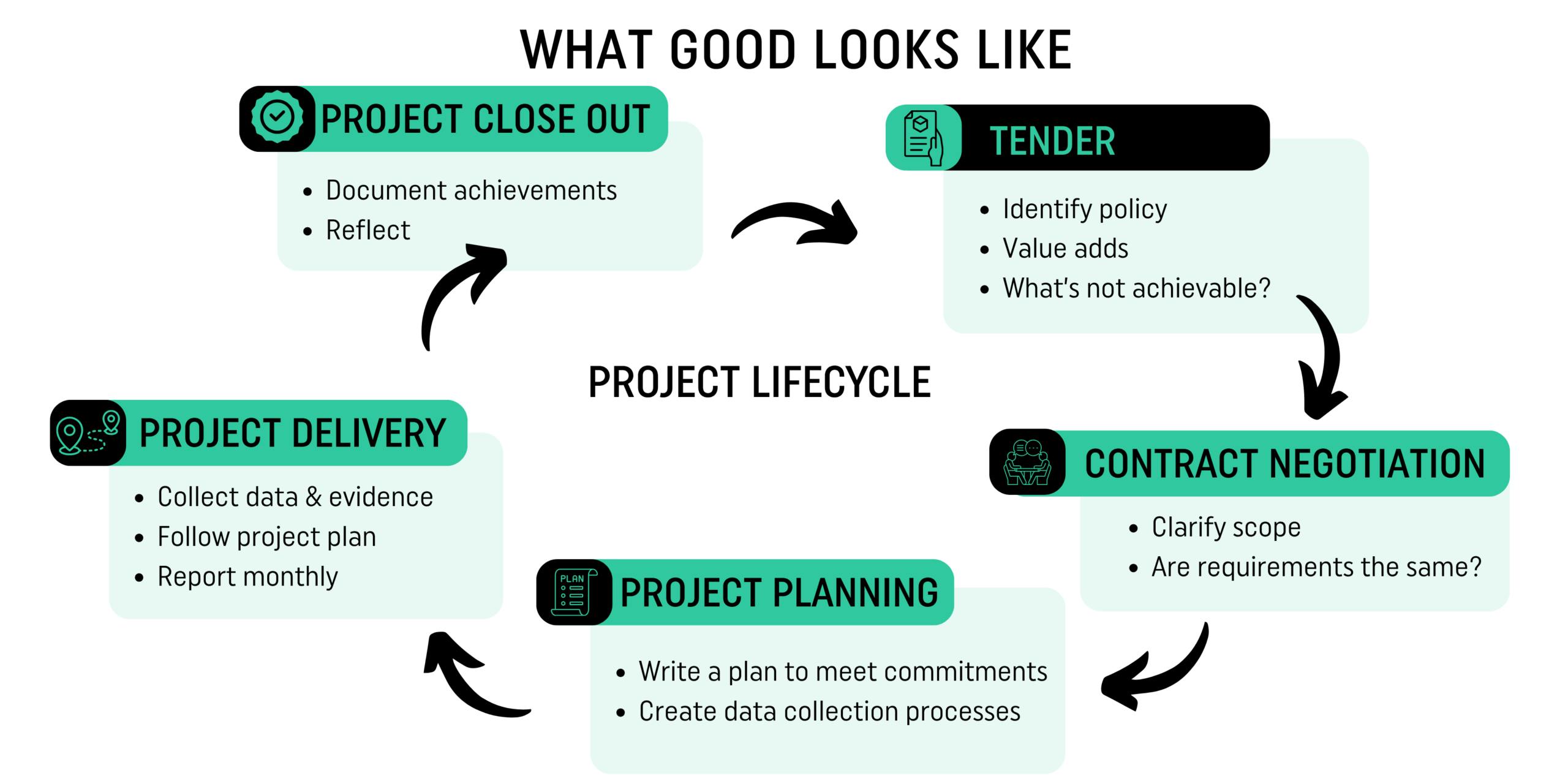
Tender
- We find anywhere in the documentation that references a Government Procurementencompasses the whole process of obtaining goods and services. Beginning with the identification of needs, procurement can include the functions of planning, design, standards determination, specifica... Policy and unpack what’s required. Whether it’s workforce targets, training commitments, or procurementencompasses the whole process of obtaining goods and services. Beginning with the identification of needs, procurement can include the functions of planning, design, standards determination, specifica... expectations
- We want to push back on anything that’s not achievable and propose value-adds
- Document any exclusions or negotiated amendments
Example: In QLD, we may not be able to provide the 1,000 New Entrant hours (apprentice hours) because our scope of works doesn’t carry a formal apprenticeship qualification. However, we could provide extra Other Workforce Training Hours above what we have been asked to achieve as a value add to our submission.
Contract negotiation
- Check your contract to make sure what we agreed at tender stage is what has landed in the contract
- Liaise with the project delivery team to assess capability and risks
- Challenge anything that doesn’t align with our capacity to make sure we’re setting ourselves up for success
Project planning
- We set up folders and processes for data collection
- Make sure the project team has been trained on what’s required
- Draft a project plan to ensure we meet the requirements
Project Delivery
- This is where we prove we’re doing what we said we’d do
- Collect data and documentation as evidence to show that we are meeting our contractual requirements
- Report monthly with our progress claims
Project Close Out
- Create case studies, lessons learned and what we’d do differently next time
- That reflection helps us improve and strengthens our future tenders
- Implement any adjustments to our systems and processes to provides efficiencies in project delivery
Doing it well provides positive results
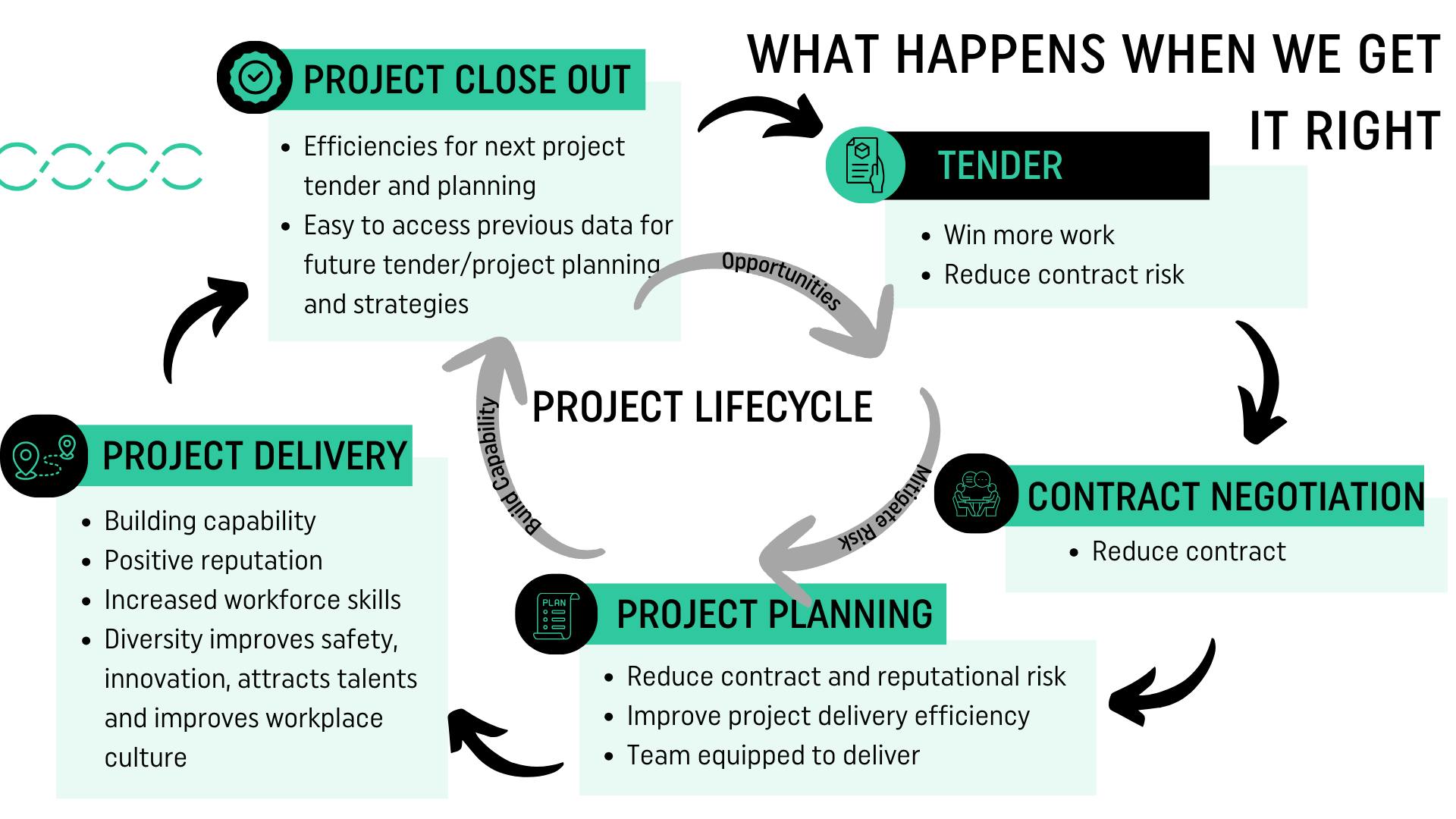
Tender
- Our track record, capability and value-adds help us win more work
- We reduce risks in the project delivery phases when we are busy trying to build
Contract negotiation
- We reduce contract risk and safeguard our reputation by ensuring we only commit to what’s achievable
Project planning
- We reduce delivery risks, streamline efficiency, and empower our project teams
- Everyone knows what’s required, and how to deliver it. Confidently and within compliance
Project delivery
- Every commitment that we deliver strengthens our future tenders, boosts our reputation, and develops our workforce and supply chain
- Diversity and upskilling lead to better safety outcomes, fresh innovation, and a team culture that attracts talent and creates pride
Project close out
- Lessons learned feed into stronger planning for the next job
- We have access to data and evidence, making future tenders more efficient and strategic
- When each phase flows into the next, we’re constantly reducing risk, building our capability and capitalising on opportunities